
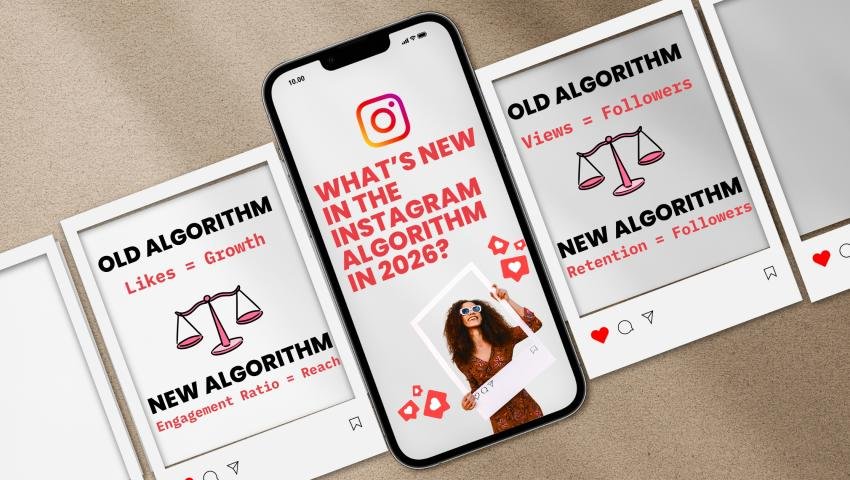
Instagram has changed. And not just a little. If you feel like your posts aren’t reaching your audience the way they used to, you’re not alone. As of January 2026, the platform runs on new rules that favor authenticity over perfection. Adam Mosseri, Instagram’s head since 2018, confirmed as much in his statements: AI is radically transforming the way content moves through the platform.
But before we get into tactics and strategy, let’s ask the right question first. Why has understanding the Instagram algorithm become so crucial in 2026?
Why the Instagram Algorithm Changed Everything in 2026
Instagram is no longer the photo-sharing app it was in its early days. The platform now has 2 billion monthly active users according to the latest official statistics, making it the third most popular social network in the world after Facebook and YouTube. But that number hides a more complex reality.
Adam Mosseri published a striking message on his official Instagram account in December 2025. In it, he explains that authenticity is becoming “infinitely reproducible.” In plain terms, artificial intelligence can now create content that looks just as real as anything made by humans. Deepfakes are becoming undetectable. AI-generated photos look identical to real captures, down to the last detail. And feeds are starting to fill up with synthetic content.
This shift poses an existential problem for Instagram. If nobody can tell real from fake anymore, how do you keep users’ trust? Mosseri says that “in a world of infinite abundance and infinite doubt, creators who can maintain trust and signal authenticity will stand out.” To pull that off, Instagram has to adapt its algorithm. Fast.
The platform is caught in a real dilemma. On one hand, it has to fight off the flood of AI-generated content threatening to drown out authentic creators. On the other, it has to keep delivering the kind of personalized experience that keeps its 2.2 billion daily active users glued to their screens. The financial stakes are enormous: Instagram is expected to generate over CHF 33 billion in ad revenue in 2026, accounting for more than 53% of Meta’s total ad revenue.
How the Instagram Algorithm Actually Works in 2026
First thing to understand: there isn’t just one Instagram algorithm. The platform runs several different AI systems that behave differently depending on where you are in the app. Your main feed, Reels, Stories, the Explore page, and search each follow their own rules.
The reasoning is simple enough. Users don’t behave the same way everywhere. As Adam Mosseri puts it: “People tend to look for their close friends in stories, use Explore to discover new content and creators, and go to Reels to be entertained.” Each section serves a different need, and the algorithm adapts accordingly.
The main feed favors accounts you interact with regularly. Instagram looks at your engagement history, how recent the posts are, and your relationship with the creator. The more you comment, message, or spend time with someone’s content, the higher their posts will show up in your feed. It’s really that simple.
Reels work differently. Here, Instagram bets everything on entertainment and discovery. The system tracks how long you watch a video, whether you finish it, whether you rewatch it, and whether you share or save it. These signals count far more than likes. In fact, Reels now generate 38.5% of all posts in the feed according to Vidico data, and they’re 22% more engaging than standard videos.
Instagram also introduced Trial Reels in 2025. This system lets you test your content with people who don’t follow you yet. If your Reel performs well with that cold audience, Instagram then rolls it out more broadly. It’s a kind of trial run that lets the platform assess your content’s quality without risking cluttering the feeds of your existing followers.
Stories favor closeness. The algorithm looks at which Stories you check regularly, which accounts you interact with through question stickers or polls, and how often you send direct messages in response. Instagram even factors in your offline connections to determine the order Stories appear in your bar.
The Explore page works like a recommendation engine. It analyzes your likes, saves, and comments, then suggests similar content from accounts you don’t follow yet. This is where smaller creators can see their visibility explode, if they produce content that resonates with a specific audience.
The Major 2026 Updates That Are Changing the Game
Instagram rolled out several significant changes in 2026. The biggest one concerns watch time. Instagram used to measure the percentage of a video watched. Now, the platform prioritizes absolute watch duration. A 90-second video watched for 60 seconds will perform better than a 30-second video watched all the way through. This change favors quality content that genuinely holds attention.
The algorithm now also analyzes “conversation depth.” A three-word comment like “great video!” is worth almost nothing. On the other hand, a multi-sentence comment that sparks a real discussion with other users sends a very strong signal to Instagram. The platform is trying to favor genuine engagement over surface-level interactions.
Adam Mosseri also confirmed in January 2026 that hashtags no longer work the way they used to. In a post on Instagram, he stated clearly that hashtags now serve only to categorize content for AI, not to increase reach. Instagram is moving toward a semantic search model where the keywords in your captions, on-screen text, and captions/subtitles matter far more than thirty random hashtags.
The platform also launched the “Adjust Your Algorithm” feature, letting users choose which topics they want to see more or less of. This option gives people direct control over their recommendations, responding to criticism that Instagram was imposing an overly opaque feed. It’s an attempt to strike a balance between automatic personalization and user choice.
What Instagram Actually Prioritizes in 2026
Saves and shares have become the top metrics. When someone saves your post, they’re telling Instagram: “This content is valuable, I want to find it again later.” When someone shares your Reel by DM, they’re saying: “This content deserves to be seen by my friends.” Both of these actions carry far more weight in the algorithm than a simple like.
Direct messages also play a major role, especially for Reels. Instagram interprets a DM share as a strong engagement signal. That’s why you see so many creators end their videos with “send this to someone who needs to see it.” This tactic works precisely because it matches exactly what the algorithm values.
Originality now matters enormously. Instagram wants content created specifically for its platform, not recycled material from TikTok or other networks. Eileen Kwok, a social marketing specialist at Hootsuite, confirms that “the algorithm is going to start prioritizing and rewarding original, creative content.” In concrete terms, avoid videos with a visible TikTok watermark or the 9:16 format with the tell-tale black bars of another platform.
Instagram also tracks negative signals. If users quickly scroll past your post, leave your video after a few seconds, or hit “Not Interested,” your content drops in the rankings. The platform is trying to filter out what people aren’t interested in, to keep them engaged for as long as possible.
The Impact of AI on the Instagram Algorithm
Adam Mosseri predicts that feeds are going to fill up with “all synthetic” content. AI tools now let anyone create photos and videos indistinguishable from content shot with a real camera. Faced with this reality, Instagram has to evolve fast.
The platform is working on several fronts. First, it’s going to strengthen labeling of AI-generated content. But Mosseri admits that detecting fakes is becoming harder and harder. So he suggests a reverse approach: instead of chasing down fake content, Instagram could “mark real content” by working with camera manufacturers to cryptographically sign images at the moment of capture.
This shift puts authentic creators in a tricky spot. On one hand, AI makes content production easier. On the other, it threatens to drown out real creators under an avalanche of synthetic content. Mosseri believes the creators who succeed in 2026 will be those who “can maintain trust and signal authenticity by being real, transparent, and consistent.”
Paradoxically, Mosseri also suggests that “raw,” even “unflattering” content could become a way to prove authenticity. When anything can be AI-generated and made perfect, imperfections become a form of proof of reality. Photos that are too smooth, too polished, too perfect might come under suspicion of being artificial. It’s a complete reversal from previous years, when Instagram was synonymous with aesthetic perfection.
How to Adapt Your Strategy for 2026
Focus on retention. Your number-one priority should be keeping viewers watching all the way to the end of your videos. Start with a strong hook in the first three seconds, but put real work into your last ten seconds too. That’s where your real visibility gets decided.
Create content worth saving. Ask yourself this before every post: “Would someone want to find this again later?” Tutorials, resource lists, practical guides, and recipes work particularly well because they offer concrete value people want to hold onto.
Favor formats that encourage sharing. Funny, surprising, moving, or useful content gets shared naturally. Memes, inspiring stories, surprising discoveries, and practical tips are more likely to get sent by DM. And remember: a share is worth far more than a like in the 2026 algorithm.
Use text strategically. Instagram now works like a search engine. Weave natural keywords into your captions, your bio, and especially the on-screen text in your Reels. Don’t stuff your posts with hashtags. Stick to 3 to 5 highly relevant hashtags that precisely describe your content.
Encourage genuine conversations. Instead of asking generic comment questions (“What do you think?”), prompt specific discussions that generate longer responses. Reply to every comment personally to spark exchanges that show Instagram your content builds real connections.
Stay consistent within your niche. Instagram is now trying to understand what your account is about as a whole, not just what you’re posting today. If you keep jumping from one topic to another with no common thread, the algorithm will struggle to know who to recommend your content to. Define your theme and stick to it.
Test with Trial Reels. This feature lets you check whether your content works with a cold audience before sharing it widely. It’s a valuable tool for fine-tuning your strategy without risking the engagement of your existing followers.
The Statistics That Actually Matter in 2026
The numbers speak for themselves. Reels now account for 59% of total engagement for content creators, according to Meltwater. Even more telling: Reels are reshared more than 4.5 billion times a day across Instagram and Facebook combined.
Users spend an average of 33.9 minutes a day on Instagram, and more than half of that time goes to Reels. This statistic makes it clear where attention is in 2026. If you want visibility, short-form video is no longer optional — it’s a necessity.
Instagram’s enormous markets represent huge opportunities, but also fierce competition for attention. In Switzerland, where advertising costs can climb quickly, understanding the organic algorithm becomes all the more crucial for businesses.
The demographic breakdown is shifting too. The 25-34 age group remains the most active, at 31.2% of users, but 18-24 year-olds are catching up fast. These younger users spend an average of 53 minutes a day on the platform, nearly double the overall average. They represent the platform’s future and increasingly dictate its trends.
When and How Often to Post
Consistency beats quantity. It’s better to publish three quality Reels a week than seven mediocre videos. Instagram now penalizes accounts that flood the feed with too much content too fast. The algorithm can decide to show your content less if you post too frequently.
Timing still matters, but not in the way people usually think. The algorithm no longer systematically favors recent posts. However, initial engagement in the first few hours after publishing sends a strong signal. If your post quickly generates saves and shares, Instagram will distribute it more widely, even several days later.
Data shows Reels perform particularly well on Saturdays between 10pm and 7am, according to Teleprompter. But these averages hide huge variation depending on niche and audience. The best time to post is still whenever your specific audience is most active. Analyze your own stats to identify your own optimal windows.
The Critical Importance of Authenticity in 2026
Authenticity is no longer a bonus — it’s a survival necessity. In a world where AI can generate any kind of content, creators who show their real personality, their failures, their process, and their reality naturally stand out.
This shift is upending Instagram’s usual codes. The platform that once glorified aesthetic perfection now values what’s raw, spontaneous, and imperfect. Overly retouched photos, overly staged setups, and overly polished videos can now work against you by making your content look AI-generated.
Adam Mosseri said it clearly: in the near future, users will naturally become skeptical of all content. They’ll systematically ask themselves: “Who made this? When? What else have they posted?” This widespread wariness will favor creators who build a consistent, transparent, and verifiable presence over the long term.
How Mondi Agency Can Help
Navigating these constant changes takes expertise and time. The Instagram algorithm evolves every week, trends shift, and staying current becomes a full-time job. That’s exactly where Mondi Agency comes in.
Our agency understands that every business has unique needs. Some brands need an authentic presence that resonates with their community. Others are looking to turn visibility into concrete sales. Others still simply want to understand how this complex machine called Instagram works in 2026.
We help our clients build content strategies that work with the algorithm rather than against it. No magic formulas, no dubious hacks — just a deep understanding of what works today, and the resources to put it into practice effectively. Because ultimately, understanding the algorithm is useless if you don’t have the time or the team to actually put it to work.
Mistakes to Absolutely Avoid
Never buy followers or engagement. Instagram detects these practices with growing precision thanks to AI. An account with 10,000 ghost followers will always perform worse than an account with 1,000 real, engaged followers.
Don’t mindlessly recycle TikTok content with the logo still visible. Instagram penalizes this kind of content because it wants original creations made for its platform. If you’re repurposing content, take the time to genuinely adapt it to Instagram’s format and audience.
Don’t ignore your comments. Engagement in the first few hours is crucial. When you publish, stay available to respond quickly to early comments. This early interaction signals to Instagram that your post deserves wider distribution.
Don’t jump from trend to trend with no consistency. The 2026 algorithm analyzes your account as a whole to understand your niche. A chaotic feed with no common thread confuses the AI and reduces your reach. Find your theme and build on it progressively.
Don’t forget that substance matters as much as style. Technically flawless videos with no substance won’t hold attention all the way through. Focus on the value you’re delivering to your audience, not just the aesthetics.
Conclusion: The Future Belongs to the Authentic
Instagram 2026 marks a turning point. The platform is shifting from a logic of visual perfection to a logic of verifiable authenticity. AI is upending the established rules and forcing everyone to adapt. The creators who succeed will be the ones who understand these changes and adjust their approach accordingly.
The algorithm isn’t your enemy. It’s a system that’s simply trying to show users the content that will interest them the most. When you create content that’s valuable, original, authentic, that sparks real conversations, and holds attention, the algorithm becomes your best ally.
The numbers are clear: Instagram remains a massive platform with 2 billion users and ad revenue exceeding CHF 42 billion. The opportunity is there. But it requires understanding today’s rules, not the ones from two years ago.
If you want to deepen your Instagram strategy or you’re looking for professional support to navigate these changes, contact Mondi Agency. Our team stays current on every evolution of the algorithm and can help you turn that understanding into concrete results for your business.